

How to think about AI usage in PR
In a recent panel hosted by Chrissy Farr’s Second Opinion Media, veteran health tech marketers dealt with a question on so many teams' minds right now: What is the value of public relations in an AI-driven world?
Panelists John Hallock, Arielle Spiegel, Brandon Young, and Derek Flanzraich agreed the PR game has changed. The value of earned media is on the rise again as large language models consistently cite reputable publications and review sites in their responses to inquiries around industry outlooks, competitors, service offerings, and the like.
But even if there is a resurgence for PR, it’s not enough to go back to the tired method: posting a few stiff press releases and angling for a couple of mentions in trade publications.
If you’re looking to outshine your competition, you’ll need to be even more forward-looking and innovative — whether you’re part of a marketing team or a PR agency. Here are the top five things to keep in mind as you work with and analyze AI to inform your PR strategies and measure success.
1. Know how your brand is showing up in LLMs
Before developing any marketing or communications strategy, you need as much information as possible about what your brand looks like to the public. Traditionally, that could have meant hiring a market research firm, scouring social media, doing customer interviews, etc. All of that is still important, but in the age of AI, you need to figure out how ChatGPT, Gemini, and other LLMs view you.
For early-stage startups, that’s as simple as asking ChatGPT, “Tell me about (insert company name here). What are the pros and cons? Who are the competitors?” Doing this simple search across all the major LLMs can start to give you an idea of what is being fed into these models and where that information is coming from.
At the same time, you need to know what is being said about your industry. How often does your company’s name come up? How does that compare to how your competitors are showing up? Are you showing up in a positive or negative light?
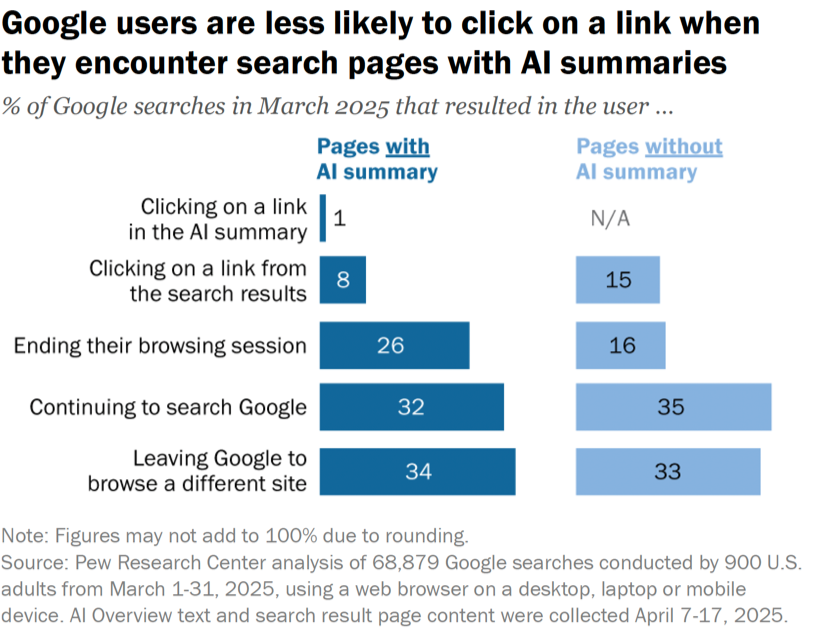
Old SEO rules say you need to think about this to get people to click over to your website, but that’s just not how customer behavior works now. A recent study from Pew Research Center shows more than half of all Google Users end their search after reading an AI summary. That means your brand better be showing up in those summaries more than your competition.
Do you know if it is?
2. Measure how that appearance and sentiment changes over time
If you’ve completed step one, pat yourself on the back. But now the real work begins: time to track how that changes over time. The goal of any communications strategy is to improve sentiment and increase your share of voice — the amount of space you dominate in the shared public conversation amongst your competitors. But if you don’t have a system in place to track it, then you are just going to be throwing spaghetti at the wall and hoping something sticks.
The most basic DIY version of this is to check all the LLMs yourself every week. Create some sort of spreadsheet that lets you see the number of times your brand appears in the response, what links are being cited, how many times your competition is being mentioned, etc. Make sure you use the same prompts every single time.
Spoiler alert: This is time-consuming. If you don’t already have an agency partner and the idea of adding this process to your todo list is already giving you a headache, it might be time to consider one.
When evaluating an agency, you should ask what systems they have in place to track appearance, sentiment, and share of voice. Do they do it manually? Do they use an analytics tool? How often are they going to share that data? And then the most important question: How do they use that data to inform their strategy?
Any good communications strategy should result in an increase in your share of voice across platforms, an increase in positive sentiment, and an increase in the use of your preferred language when talking about your brand. It’s all well and good to have the platform of the month spit out analytics — we all use one — but it’s another thing entirely to understand how that knowledge plays out in the broader execution of your PR plan.
3. Use LLMs to inform your content strategy
Let me be clear right from the start: I am not advocating the use of ChaptGPT to create content. But in the age of AI, teams need to reverse engineer their content strategy.
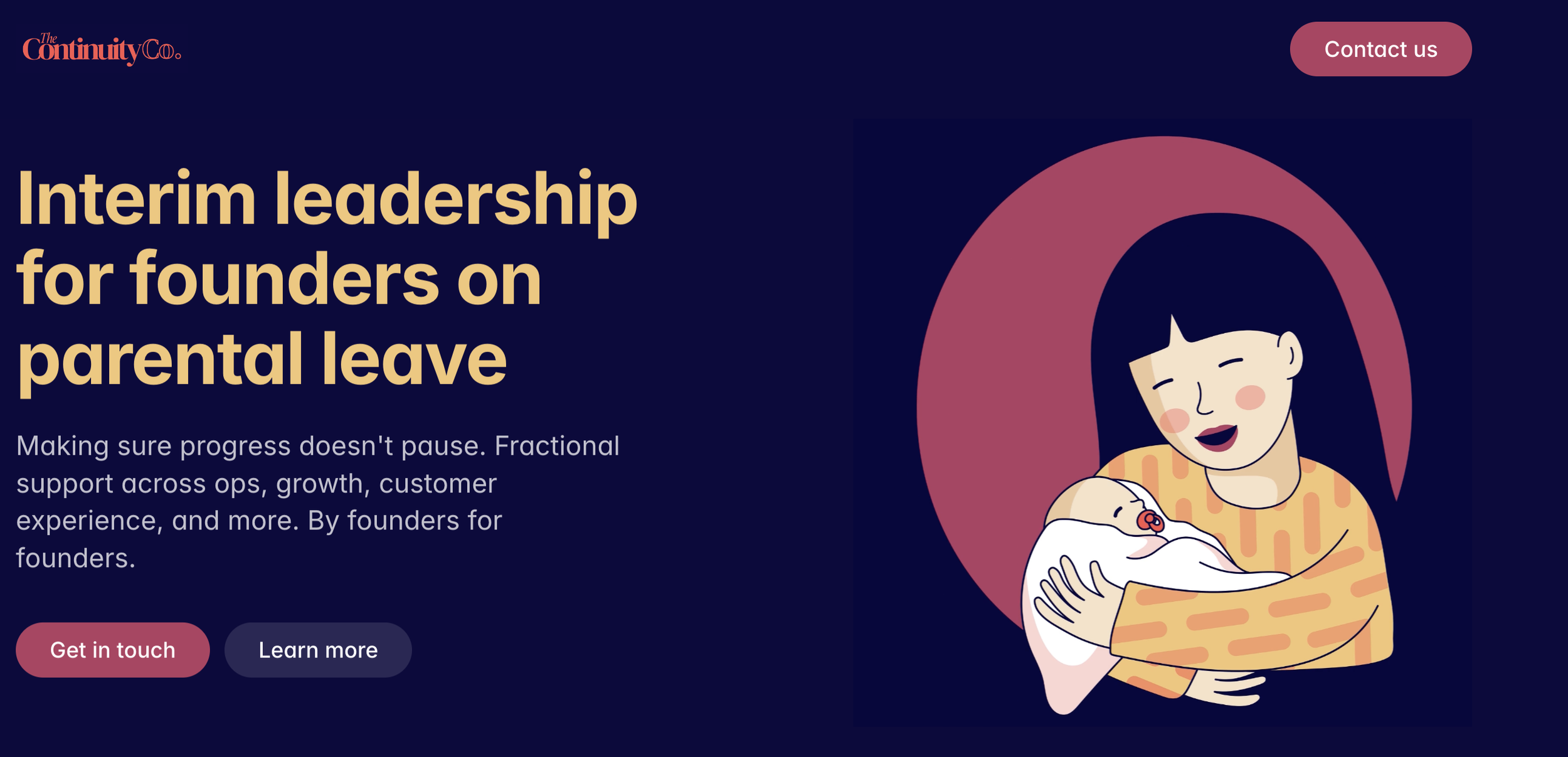
Here’s an example: At HeadStart, we started creating a strategy for The Continuity Company, a startup focused on providing temporary support for founders who have to go out on extended leave. While going through step one, we found that LLMs advised executives to find fractional support when they are out on leave, but did not mention any specific company that provides that type of support.
So the logical next question we had was: How are these engines recommending fractional support without mentioning a company? That’s when we looked at the sources the engines were pulling in. The most cited sources were from reputable earned media outlets like Business Insider and Forbes. When looking at the levers we could pull to get Continuity Co into the conversation around temporary executive support, we were able to confidently recommend a PR strategy over a social strategy or owned content strategy, and, even better, we could back it up with some pretty impactful data.
That said, when we asked these engines specifically about Continuity Co and its competitors, the most commonly cited sources were owned pieces of content and Continuity Co’s own website.
That knowledge enabled us to develop a two-pronged approach: To increase awareness in the broader conversation around leave and executive support, we should put together a targeted earned media strategy, but to improve sentiment around Continuity Co, we’ll also need to focus on owned blog posts and LinkedIn.
We reverse engineered what LLMs were saying to inform our content strategy. We looked at the key phrases being mentioned over time and will be producing content around them. We’ll also continue tracking the sources being mentioned and target reporters at those outlets. Without tracking this data over time and asking the right prompts during discovery, we would have been shooting in the dark to try to improve the AI presence for Continuity Co.
Shameless Plug: Continuity Co is doing great work helping founders, especially expecting moms, be able to balance running their businesses and having a family.
4. Use AI to guide the work, not to do the work for you
Maybe a little late, but here’s a disclaimer: this article was completely written by a human.
ChatGPT and Gemini can create content, but their goal is to create the average piece of content. Your goal should always be to produce exceptional content that goes above and beyond, not just that which barely clears the bar for passable.
That said, LLMs can be great coworkers. They can help you brainstorm ideas, touch up a draft, call out weak spots in a strategy, etc. Think of the LLM as your mom reading your essay when you were in high school. She’d give you tips and help guide you through any issues, but she wouldn’t write your whole essay for you — at least, I hope not.
In PR, the same needs to be true. Using AI to brainstorm pitch ideas should be commonplace, but having it write your pitch or press release isn’t the best move. Instead, you or your agency partner should have a system in place to evaluate pitch and campaign effectiveness using AI, and the work should still undoubtedly be performed by a human.
5. Balance the innovation of AI with the necessary personal touch
John Hallock said it best when he explained during the panel that no matter how you use AI in PR, you won’t have success without reporter contacts and a followup plan.
A successful PR person needs to excel at building relationships, something an AI engine cannot do, and good earned media requires storytelling, relationship building, and interpersonal skills. Those are still at the center of a successful communications plan, and are all inherently human capabilities.
AI can enhance those skills and provide the backbone for a PR strategy, but it will not be successful on its own. If it were, then the old tactic of spray and pray, sending 1,000 pitches to every reporter, would work. But it doesn’t. The strategies that work focus on story, and in today’s AI world, that means balancing the innovation that AI brings to the content creation world with the human skills that have helped marketers be successful for decades.
So where does that leave you? Hopefully, AI wasn’t wholly managing your communications plan — but if it was, take this as the wakeup call you need to make a change. Utilizing AI to boost your communications plan can be highly impactful — I might even go so far as to argue that it’s necessary in today’s world to avoid being left behind by your more futureforward competitors.
Don’t fall into the trap of avoiding its use, but also be sure to recognize the balance between man and machine. PR is still a people business, after all, and naming your favorite LLM chatbot doesn’t make it human. Whether you’re going at it alone inhouse or partnering with an agency, be sure to keep these tips in mind to pack the biggest punch with your communications strategy, even in this age of AI.
Hungry for more of our thoughts?